
Living a Zero Waste Lifestyle in 2026 isn’t about perfection—it’s about progress. With growing awareness around climate change, rising costs of living, and the explosion of consumer waste (both physical and digital), more people are looking for practical ways to live sustainably without overhauling their entire lives.
Whether you live in a busy city apartment or a shared home, this guide will walk you through simple, realistic steps to reduce waste and embrace a more mindful way of living.
50 Positive Affirmations for Women to Boost Confidence and Self-Love

What is a Zero Waste Lifestyle?
A Zero Waste Lifestyle focuses on minimizing the waste you send to landfills by rethinking how you consume, reuse, and dispose of products. It’s guided by the 5 R’s:
- Refuse what you don’t need
- Reduce what you do use
- Reuse what you can
- Recycle what you can’t refuse
- Rot (compost) the rest
This approach has evolved in 2026 to include not just physical waste, but also digital waste—like unused cloud storage, redundant files, and energy-heavy online habits.
Why Zero Waste Matters in 2026
Environmental Benefits
Adopting a Zero Waste Lifestyle significantly reduces your environmental footprint:
- Cuts down landfill waste and pollution
- Reduces carbon emissions from production and transportation
- Supports a circular economy, where products are reused and recycled rather than discarded
Financial Benefits
Sustainability is no longer expensive—affordable sustainability is a major trend in 2026:
- Save money by buying less and reusing more
- Reduce grocery bills by learning how to reduce food waste
- Invest once in reusable items instead of repeatedly buying disposables
Backed by Data
According to global environmental reports:
- Over 2 billion tons of waste are generated annually
- Food waste alone contributes to nearly 8–10% of global emissions
Zero Waste International Alliance
Getting Started: Small Steps That Make a Big Difference
Starting your Zero Waste Lifestyle doesn’t require a dramatic overhaul. Begin with manageable changes.
1. Audit Your Waste
Before making changes, understand your current habits:
- Track your trash for a week
- Identify the most common waste items (plastic packaging, food scraps, paper)
- Focus on reducing one category at a time
2. Switch to Reusables
Replace single-use items with durable alternatives:
- Carry a reusable water bottle and coffee cup
- Use cloth bags instead of plastic
- Swap paper towels for washable cloths
3. Practice Mindful Consumption
Ask yourself before buying anything:
- Do I really need this?
- Can I borrow or buy it second-hand?
- Is there a more sustainable option available?
Eco-Friendly Swaps 2026: Modern & Practical Alternatives
Sustainability in 2026 is smarter, more accessible, and often tech-enabled. Here are some eco-friendly swaps 2026 to try:
Everyday Swaps
- Bamboo toothbrush → Replace plastic toothbrush
- Solid shampoo bars → Replace bottled shampoo
- Refillable cleaning products → Reduce plastic packaging
Kitchen Swaps
- Beeswax wraps → Replace cling film
- Glass containers → Replace disposable storage
- Compost bins → Manage organic waste efficiently
Tech & Digital Swaps
Digital waste is a growing concern. Try these:
- Delete unused apps and files regularly
- Use energy-efficient devices
- Switch to cloud providers powered by renewable energy
How to Reduce Food Waste at Home
Food waste is one of the easiest areas to improve—and it saves money too.
Smart Shopping Tips
- Plan meals for the week
- Stick to a grocery list
- Avoid bulk buying perishable items unless necessary
Storage & Usage Hacks
- Store fruits and vegetables properly to extend shelf life
- Freeze leftovers instead of throwing them away
- Use “ugly” produce—it’s just as nutritious
Creative Cooking
- Turn leftovers into new meals
- Use vegetable scraps for broth
- Compost what you can’t eat
The 5 R’s in Action
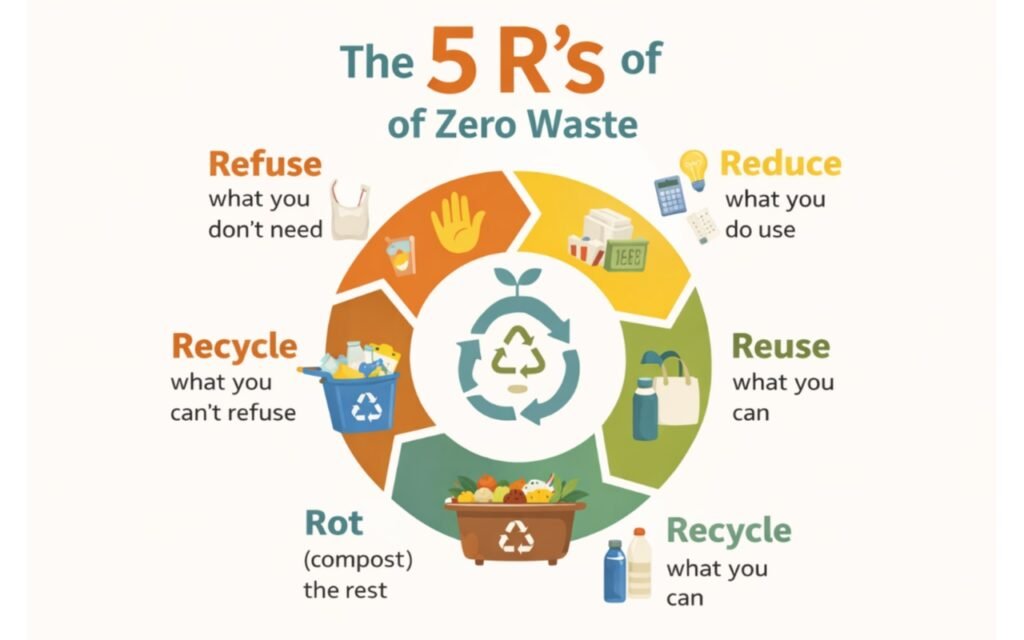
Let’s break down how to apply the 5 R’s in daily urban life:
Refuse
- Say no to freebies and single-use plastics
- Opt out of unnecessary packaging
Reduce
- Declutter your home
- Limit fast fashion purchases
Reuse
- Repair instead of replacing
- Buy second-hand items
Recycle
- Learn your local recycling rules
- Clean and sort recyclables properly
Rot
- Compost kitchen waste
- Explore community composting if space is limited
Sustainable Living Tips for Urban Dwellers
Living in a city doesn’t mean you can’t adopt a Zero Waste Lifestyle.
Space-Saving Ideas
- Use compact compost bins
- Choose multi-purpose products
- Store items efficiently to avoid overbuying
Community-Based Living
- Join local sharing groups
- Participate in swap events
- Support zero-waste stores and refill stations
Transportation Choices
- Use public transport or carpool
- Walk or cycle for short distances
- Consider electric mobility options
Understanding the Circular Economy
A key concept in 2026 sustainability is the circular economy.
What It Means
Instead of the traditional “take-make-dispose” model, a circular economy focuses on:
- Designing products to last longer
- Reusing materials
- Recycling efficiently
How You Can Support It
- Buy from sustainable brands
- Choose products with minimal or recyclable packaging
- Repair items instead of discarding them
Common Challenges (and Realistic Solutions)
Adopting a Zero Waste Lifestyle can feel overwhelming at first—but it doesn’t have to be.
“It’s too expensive”
Solution:
Start small. Many sustainable choices (like using less) actually save money.
“I don’t have time”
Solution:
Incorporate habits gradually—like carrying a reusable bag or planning meals.
“It’s not convenient”
Solution:
Convenience improves with habit. Keep essentials (bags, bottles) within reach.
Final Thoughts: Progress Over Perfection
A Zero Waste Lifestyle isn’t about producing zero waste overnight—it’s about making better choices consistently.
In 2026, sustainability is more accessible than ever. With innovations in plastic-free alternatives, growing awareness of digital waste, and a shift toward affordable sustainability, there’s never been a better time to start.
Focus on what you can do, not what you can’t. Every small step—no matter how imperfect—contributes to a larger impact.

Wasim Akram is the Founder of LuxuryGole and a dedicated Tech Expert with over 10 years of experience in the digital ecosystem. Specializing in smartphone optimization, hidden software hacks, and digital security, Wasim focuses on providing premium, actionable insights to help users master their technology. His decade-long journey in the tech space ensures that every guide on LuxuryGole is backed by deep research and practical expertise. Connect with him on LinkedIn and Facebook for daily tech updates